
The Porch: Stories from Atlanta
This page includes clips of the full narratives by legacy residents of Atlanta. The full narratives and transcripts can be found HERE (coming soon!).

Family and dog sitting on their front porch.
Opening: Meaning of The Porch
The Porch is a gathering place for conversation and reflection—a welcoming space for openness and respect. The porch is where generational wisdom flowed, and where the elders kept watch over the younger ones playing outside. It is both a figurative space and a literal space of connection.
Clip 1.1 - Dr. Georgianne Thomas
Community is like a spider's web. Homes in neighborhoods are connected through a web, and porches connect neighborhoods. - Listen
Clip 1.2 - Brenda Griffin
Brenda Griffin shares a memory of sitting on her grandmother’s porch with her grandmother’s friends– shelling peas, shucking corn and the lessons that “filtered into her spirit” while sitting there about the community and life. - Listen
Clip 1.3 - Yinka Winfrey-Diop
One of Yinika's favorite places is her porch. She discusses the talent that Atlanta fosters and the creativity that flows from her city. - Listen
Clip 1.4 - Paula Morgan
For Paula Morgan, the porch is where kids came together to be watched over by the neighborhood elders. Miss Grant watched the kids and acted as a grandmother figure for the neighborhood children. - Listen
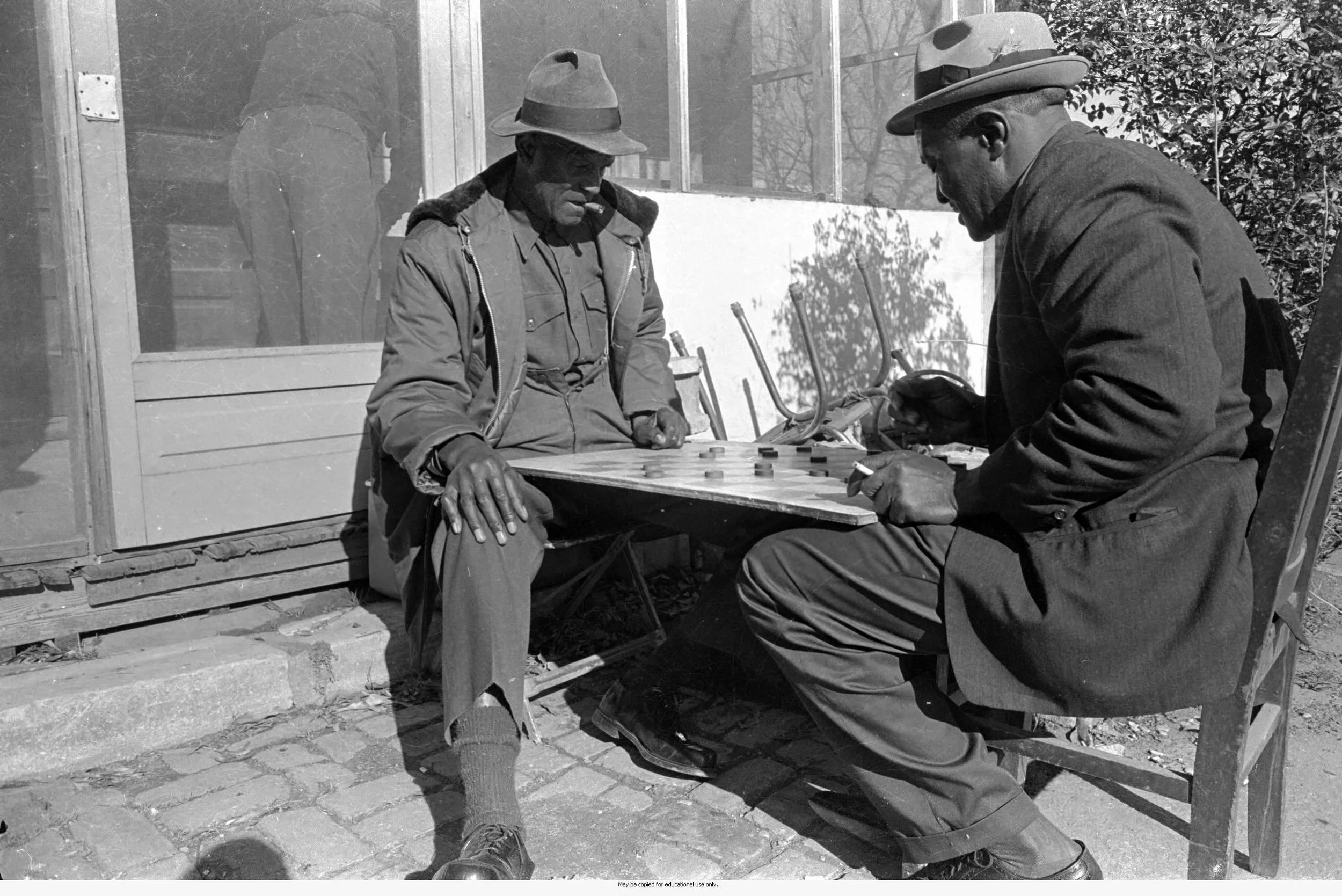
V003-701224-A09, Tom Coffin Photographs. Special Collections and Archives, Georgia State University Library.
The Meaning of Community
What does community mean to you? It is a complicated word: community. Is it a shared language? Shared culture? Is it your neighborhood or city? Maybe…it is all of the above and more.
Clip 2.1 - Patricia Banks
Patricia Banks describes the community as a loving place: "Everyone was concerned about each other." - Listen
Clip 2.2 - Martha Maxey
One of Marth Maxey's favorite community spots is the Thomasville Recreation Center in Atlanta. She enjoys the activities and lives close enough to walk to the rec center. - Listen
Clip 2.3 - Felicia Moore
“Community” to Felicia Moore is the right to live in safety. This means free from rats and filth. - Listen
Clip 2.5 - Doris Morgan
Community means many things, and Doris Morgan sees it as a place to raise one’s children, find safety, and be involved. - Listen
Clip 2.6 - Iona Walker
Iona Walker sees community as a place for friendship and family. - Listen

Close-up of a football goal post.
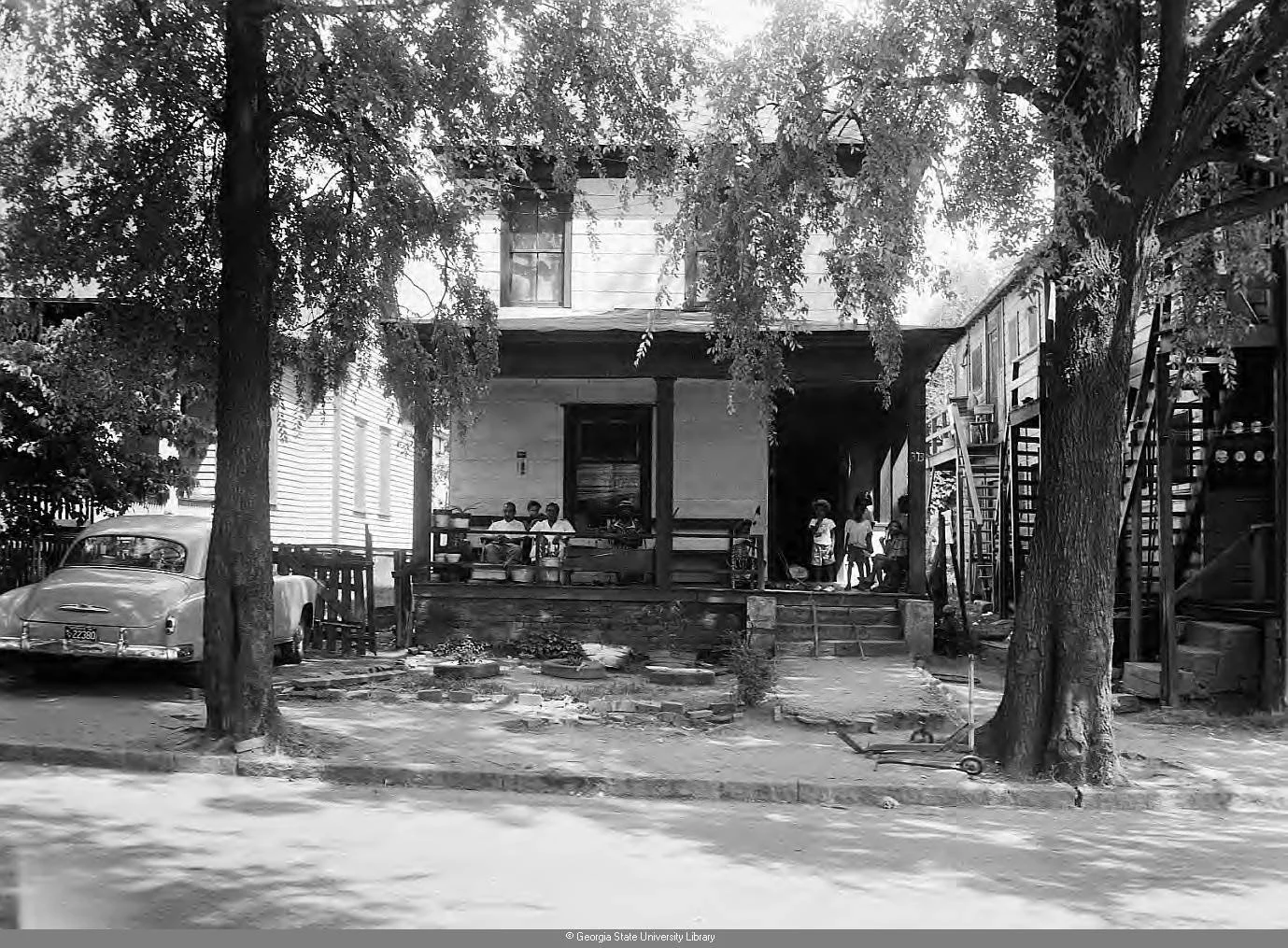
LBGPNS4-188b, Lane Brothers Commercial Photographers Photographic Collection, 1920-1976. Photographic Collection, Special Collections and Archives, Georgia State University Library.
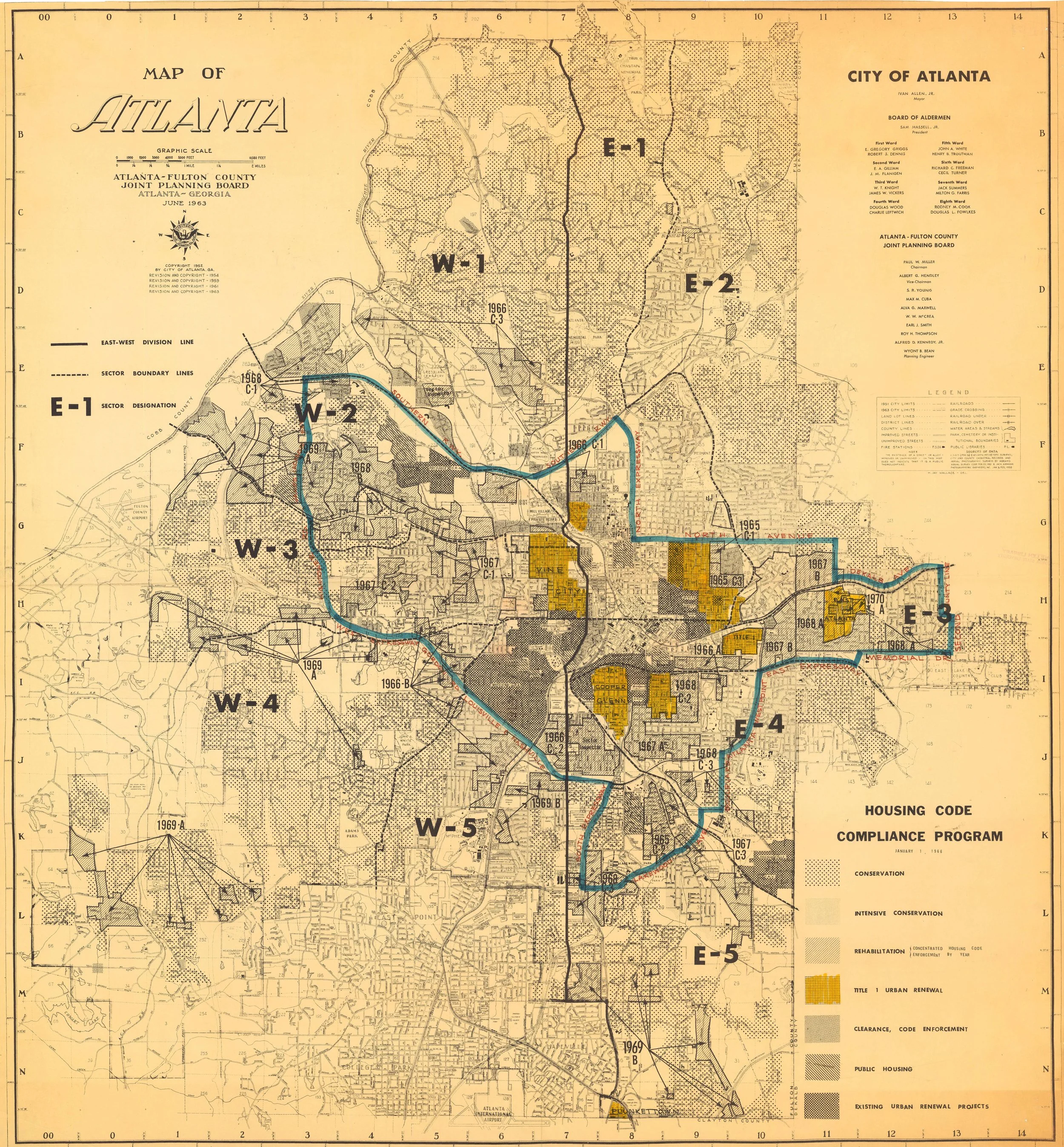
Map of Atlanta, Georgia, 1946. AFPL_M0035, Atlanta-Fulton Public Library Digital Collection, Georgia State University.
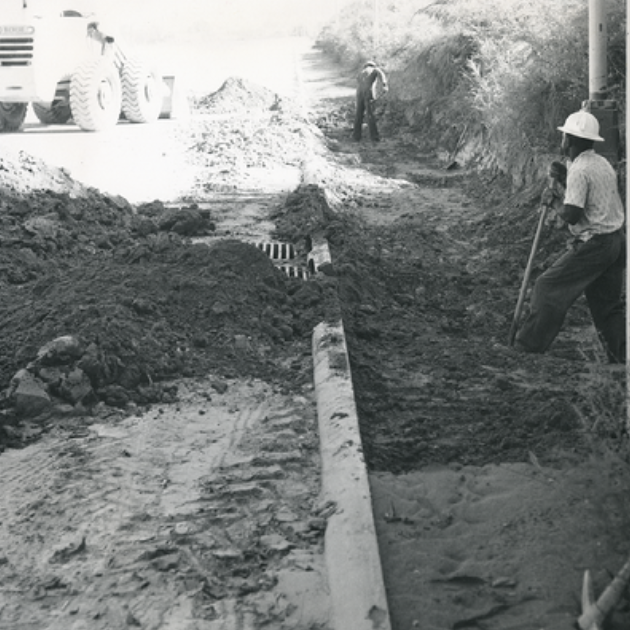
Interstate Highway Construction in Atlanta. Courtesy of the Atlanta History Center.
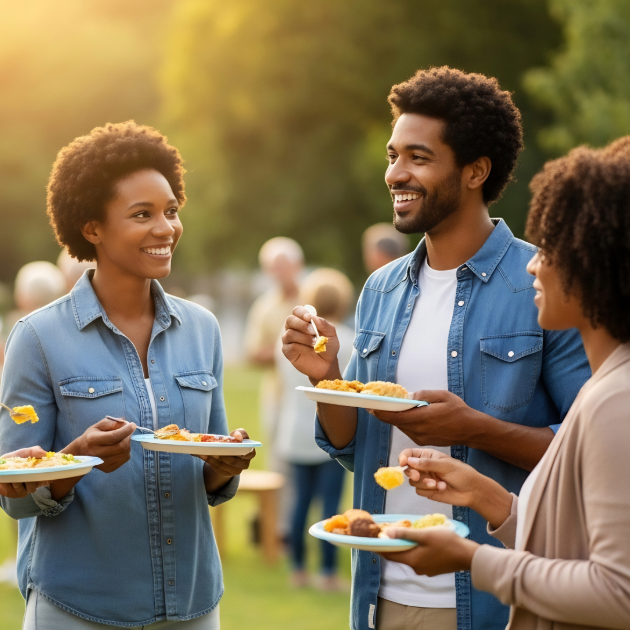
Image of three people eating picnic food.
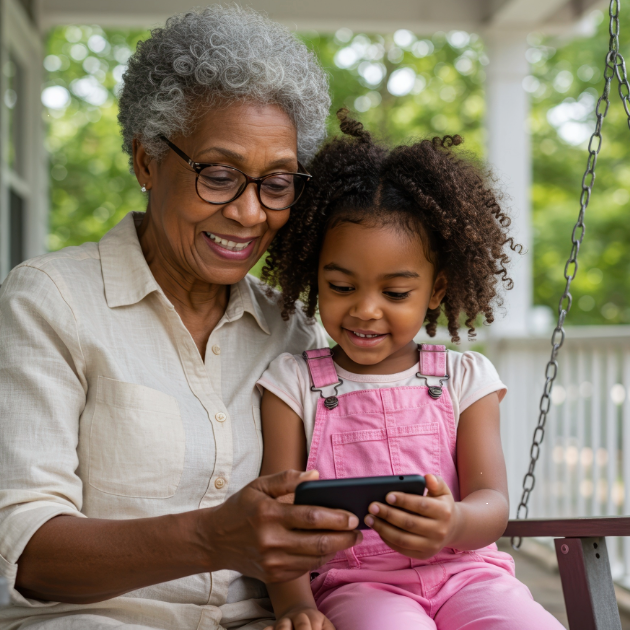
Grandmother and granddaughter are sitting together on a porch swing, looking at a phone screen.
Growing Up
Childhood and adolescence can be a time of joy and learning, creating cherished memories: playing in the woods, eating sweet treats, and cheering for the football team. Growing up can also instill life lessons that stick with you throughout adulthood. And sometimes, growing up brings clarity and understanding.
Clip 3.1 - Brenda Griffin
The community developed its own lending and funding model. Brenda’s grandfather was exceptional at finding funds. - Listen
Clip 3.2 - Brenda Griffin
“It’s a different Atlanta now.” Brenda remembers the love of reading her family instilled in her. Her favorite thing to read was National Geographic, which would later inspire a journey. - Listen
Clip 3.3 - June Thompson
June Thompson recalls the Friday pep rallies at her high school, Turner High (now closed). June wasn't allowed to stay after school because of her strict foster parent. - Listen
Clip 3.4 - Yinka Winfrey-Diop
Yinka shares her childhood memories of walking underground, playing in the creek, sports, and how everyone was like family. School is a big part of growing up, and Yinka started in the M-to-M Program. This change in schools did not affect her connection to her community; she continued walking the neighborhood with her friends.
Food is a big part of family rituals, and here, Yinka talks about how her bonus dad made her favorite meals and the kitchen table being central to their bonding. - Listen
Clip 3.5 - Dr. Georgianne Thomas
Dr. Thomas arrived in Atlanta to attend Spelman during Jim Crow segregation, a new experience because life was different in Gary, Indiana, where she grew up. Here she shares her first impression.
“We knew we were somebody.” Dr. Thomas shares how young graduates from Morehouse, Morris Brown, Spelman entered adulthood on Lynhurst in Lottie Watkins apartment.
Dr. Thomas describes being young, having fun, sharing life with other young Black adults, including overcoming challenges and moving to establish her own home. - Listen
Clip 3.6 - Patricia Banks
"When the lights come on, it was time to be home." Patricia Banks remembers playing outside until dark: hopscotch, jump rope, and games that children enjoyed before computers. - Listen
Place Shapes Our Experiences
Place is a general term that holds deep, personal meaning. A place fosters feelings of connectedness and belonging, helps us learn lifelong skills, and helps us create the life we want and our values.
Clip 4.1 - June Thompson
June Thompson shows how a place holds our memories– the challenging ones and that ones that reveal our strengths. - Listen
Clip 4.2 - M.A. Ellis
M.A. Ellis offers an architectural description of the shotgun house and its ubiquity across geographies as a house type for many early- to mid-1900 Black families and how people lived in them.
Childhood is full of adventure. Here, M.A. Ellis shares fishing stories with her grandmother, including fish, snakes, and baits! - Listen
Clip 4.3 - Doris Morgan
When one lives in a place for almost 60 years, one witnesses the changes. Doris Morgan remembers Ben Hill before Camp Creek Parkway and development came. - Listen
Clip 4.4 - Iona Walker
Development is not only a concern for humans; it also displaces wildlife. What does having a contract with a neighborhood mean? Iona Walker shares her experiences with her church and their sale of The Campground. - Listen
Clip 4.5 - Paula Morgan
Growing up in working Black families, being a child meant specializing in creativity. Paula Morgan describes the toys they made and games they played, such as collard-green string dolls, rock school, and skate scooters. - Listen
“Urban Renewal is Negro Removal”
Urban renewal projects, often framed as "slum clearance," decimated Black neighborhoods in Atlanta through the targeted construction of interstate highways, the development of major civic projects, and the use of eminent domain that resulted in mass displacement, the destruction of social networks, and the loss of generational wealth.
Clip 5.1 - Brenda Griffin
Brenda Griffin shares her grandmother’s experience on Linden Avenue in Buttermilk Bottom, Fourth Ward. - Listen
Clip 5.2 - Maerya Williams
Maerya Williams discusses the difference between a historical view of urban renewal and a contemporary understanding, noting that it spans geographies such as Oscarville, which lies under Lake Lanier, and Linnentown, under the University of Georgia. Williams also examines the intersection of urban renewal and how Black families lost both homes and generational wealth. - Listen
Clip 5.3 - M.A. Ellis
M.A. Ellis believes that urban renewal is part of the process of improvement. - Listen
Clip 5.4 - Yinka Winfrey-Diop
Yinka Winfrey-Diop shares how her Uncle Sonny attempted to organize the neighborhood, and how her grandmother’s backyard is now the highway.
Here, Yinka Winfrey-Diop describes how, over 20 years of homeownership, her block and the wider neighborhood have been gentrified, leading to the loss of identifiers of Peopletown’s Black past.
Not everyone is sad the Braves moved to Cobb County. Yinka Winfrey-Diop shares the inconvenience she experienced trying to go home on game day. - Listen
Clip 5.5 - Dr. Georgianne Thomas
Dr. Thomas shares her experiences documenting Lightening and meeting Rev. Jerome Banks and the healing required to address “root shock” as codified by Dr. Mindy Fullilove.
Dr. Thomas notes the pride people took in their homes, as demonstrated by sweeping dirt and cleaning flower boxes in yards. She initiates building connections to the past through reparations, healing ceremonies, and the adaptive reuse of buildings rather than demolition. - Listen
Clip 5.6 Paula Morgan
Moving is one of the most significant sources of stress people experience. Paula Morgan describes moving during a period of housing exclusion policies for Black people made moving even more challenging.
Paula Morgan shares her memories of going to see her father, who played in the Negro Leagues, at Ponce de Leon, which is now beneath a shopping mall, and at MARTA Vine City, which has overtaken her former home on Rhodes Street. - Listen
Effects of Urban Renewal & Highway Construction
The history of urban renewal shows us that it is two-fold. Urban renewal is an investment in a community that extends from previous disinvestment. The impact is real: people are dislocated from a social safety net and from home, which cannot be replaced.
Clip 6.1 - Patricia Banks
Even though Patricia Banks’ family’s home was unaffected, she knows others in the community lost their homes and broke up relationships. - Listen
Clip 6.2 - Brenda Griffin
Brenda Griffin describes her resentment toward urban renewal after watching her grandmother resist and work through its challenges. - Listen
Clip 6.3 - Maerya Williams
Maerya Williams reminisces about going to Greenbriar Mall during its heyday and about the amenities in her community that have been lost. She juxtaposes this loss with disinvestment over the last 30 years with current investments in the area, including grocery stores and transportation. - Listen
Working With Community Members, Not To the Community.
The best way to begin the repair is to acknowledge the harm caused by an action, then listen to the person who was harmed about ways to bring about healing. When planners and city officials wish to make changes in a community, they need to work with residents and develop a shared vision. Each community is unique, with its own social infrastructure and a distinct set of buildings and roads.
Clip 7.1 - Patricia Banks
Patricia Banks offers that the city must deal with the people, or the investments will not benefit people living there. And that growing up seeing her neighbors as family brought everyone closer. - Listen
Clip 7.2 - Yanika Winfrey-Diop
Meeting people where they are means sending people to whom Black elders feel comfortable expressing themselves, which is what Yinka Winfrey-Diop offers other thoughts on neighborhood change.
Because development is erasing the past, Yinka Winfrey-Diop chooses to speak to her neighbors 1:1, given each person’s positionality to the past. - Listen
Clip 7.3 - Brenda Griffin
Brenda Griffin shares how spatialized racial history is written in the street routes, names, and development. - Listen
Using Personal Power to Lift up Others & the Gift of Home
A tradition in the Black experience is the practice of uplifting others, especially the next generation. Where we are from are “dichotomies” that allow us to be textured people in the present moment and open worlds within us. These stories are about care and the special place, called home.
Clip 8.1 - Martha Maxey
Martha Maxey describes Thomasville as a supportive community and supports the best to develop in us. - Listen
Clip 8.2 - Cynthia Lemon
Cynthia Lemon shares the importance of family in encouraging the learning of history at home through inquiry. - Listen
Clip 8.3 - Doris Morgan
Doris Morgan, a long-time neighborhood champion and activist, shares her actions and what she is involved in today. - Listen
Clip 8.4 - Iona Walker
Iona Walker, the HOA Chair in her neighborhood, is working to bring the next generation into positions of power to create change that supports the community's growth. - Listen
Clip 8.5 - Patricia Banks
Home means relationships and gathering is what is most meaningful to Patricia Banks. - Listen
Clip 8.6 - Felicia Moore
Felicia Moore shares that she wants to share the wisdom and knowledge she received from her family with her Forest Cove community. - Listen
Clip 8.7 - Yanika Winfrey-Diop
Yinka Winfrey-Diop shares that where I’m from, Old Atlanta, is a “heart space”. - Listen
Quisque iaculis facilisis lacinia. Mauris euismod pellentesque tellus sit amet mollis.